There is some amusing commenting on the Tapehead Inspector over at Gizmodo - didn't realise that one was a film critics' blog.
There's some elation over at the Fence forum, sparked by Jonnie.
My favourite posts, ie. those that have bothered to actually write rather than just copying from Make or Gizmodo:
Synthtopia, Key of Grey, and Today and Tomorrow.

Wednesday, June 25, 2008

Monday, June 23, 2008
Saturday, June 21, 2008
Tapehead Inspector - Final Product
The Tapehead Inspector project is now at what I would call a more complete stage - video up on the project page and project photos uploading as we speak.
Aim now is to make more, hone the hacking process, and document on Instructables..
Aim now is to make more, hone the hacking process, and document on Instructables..
3D Printers summarised
This post is proud to have been syndicated to the Ponoko Blog.
If you're in the market for a 3D printer, Tim Pickup has a good report up on the options.

Tim covers the pros and cons of everything from your $600 Reprap to your $50,000 ZCorp 510 (his fave - clearly got institutional backing!). Not being in the market for one myself, one nugget I gleaned was that "when anyone makes a RepRap machine - the first item they make is this shotglass, so they can toast the machine using something that it itself has made"(pictured above). Strangely, the author doesn't say anything about Candyfab, which you could toast with its first build and then eat the glass.
Tim references Castle Island's guide on 3D printers which also holds a lot of good info. Their nutshell summary:
"What is the difference between an RP machine and a 3D printer? The flippant answer is, "about $45,000." 3D printers are really just lower-cost, somewhat less-capable, rapid prototyping machines."
Incidentally their rapid prototyping technologies comparison chart is a godsend.
Its good to see a buyers' guide like these as technologies are becoming more affordable - with the budget options, its conceivable that smaller design practices, indie designers and even makers or fabricators might be looking to buy a rapid prototyper (hence it's appearance on Make).
For is part, Tim is involved in digital art at Camberwell College of Arts, his aim being "to produce traditional art pieces (photographs, video and sculpture) using non traditional (programming) techniques." Hence 3D printing, curiously.
Via Make:blog
Downloadable Dancing Diplodocus
This post is proud to have been syndicated to the Ponoko Blog.
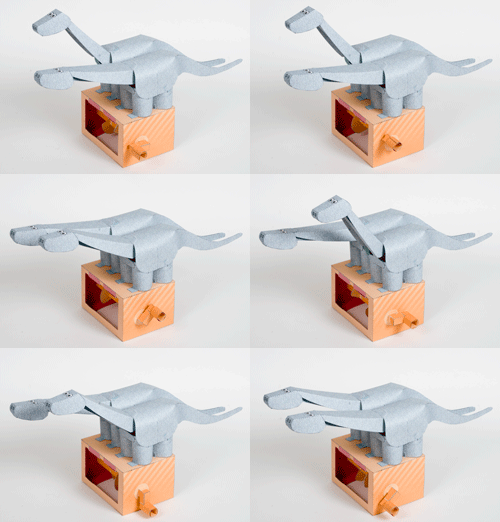
Dug recently posted news of Rob Ives' Downloadable Dancing Diplodocus (say that drunk), one of a range of similar products that combine my love of both automata and digital fabrication - simply pay your money, download the .pdfs, print out and build. Rob's Flying Pig site has a whole department of downloadable automata.

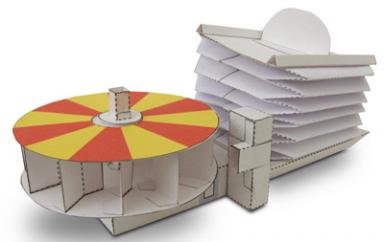
My favourites have to be the platonic solids and and the miniature wind turbine. I like Rob's variety of designs, some of them being simple demonstrations, looking like starting points or bits of a possible larger cardboard machine yet to be published! The nice thing about selling them as downloads is that one is not constrained by the economics of print runs, that part being outsourced to the user, so one can afford to have a wide range of very niche designs, that only a few might buy. Its like the long tail of paper-craft!
All images from Flying Pig
Exploiting the medium: Fractal Table
This post is proud to have been syndicated to the Ponoko Blog.
via Make, Core77 and Treehugger.
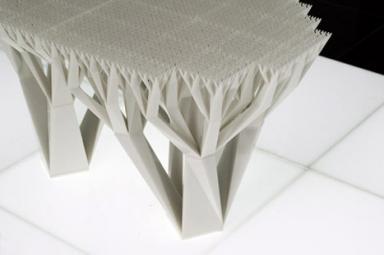
London practise Platform - Wertel Oberfell and Matthias Bär have created Fractal Table, a 3D printed piece of furniture derived from a 3D fractal, that is, 'a rough or fragmented geometric form that can be split into parts, each of which is (at least approximately) a reduced-size copy of the whole' (according to Wikipedia). So fractals are a mathematical concept and, presumably, suited therefore to computational methods of fabrication. Here is a great result of what I postulate is the urge of all industrial designers when faced with 3D printing: exploiting the medium to make objects that have previously been mostly computational, or virtual. The designers claim that the table is "impossible to manufacture unless rapid prototyped" - a bold suggestion which I'm sure a worthy craftsmen will happily try to dispell! Either way, there is no denying that this is a effective marriage of concept and process, and a great example of how new processes can push designers into otherwise unexplored areas.
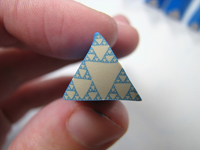
Image from EMSL
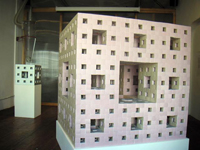
Image from IFF
Other fractal-craft projects of note are the Evil Mad Scientist Labs' Sierpinski Cookies ("make these by using a simple iterative algorithmic process of stretching out the dough and folding it over onto itself in a specific pattern"!) and Fimo Fractals. Finally, Dr Jeannine Mosely's Business Card Menger Sponge Project elegantly combines fractal geometry with 'metacycling' 66,000 business cards. Incidentally, this last project was exhibited by the Institute for Figuring who also happen to be crocheting a coral reef...
This all poses the question: What fractals can we create using laser cutting and Ponoko?
Secco: Vinyl fantasy
This post is proud to have been syndicated to the Ponoko Blog.
via Hazelann
Helsinki based Secco are what I would call a 'boutique' design house dealing in rather desirable poducts from recyclates. My favourites are their bowls from old vinyl LPs. Also of note are their handbags from repurposed tyre rubber.
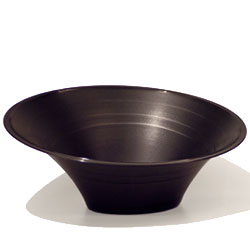
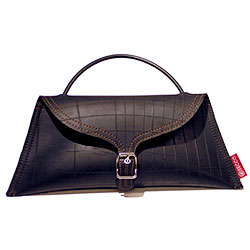
I'm sure they're not alone in the world of recycled boutique products, but what strikes me is the high quality finish in these items: these objects are really deceptive, the raw material is not hidden but has been interpreted in quite a really unique, uncompromising way to produce highly desirable items, a quality often lacking in ecodesign. Not that thats a bad thing, but its intriguing to see products from recycled materials successfully tackling a fairly high end market, for a not unreasonable price.
Secco give this humorous back story to their work:
SECCO was born in the Electronic Waste Age in Wasteland,
in a small village in a valley between the Rubber Hills. On the horizon you can just make out the giant Computer Mountains where the river of Qwerty springs. At the edge of the forest that surrounds the village
you can find the LP-Towers reaching towards the white clouds. From the top of the towers you have a breathtaking view across Wasteland.
If you're in Helsinki, Secco also run recycling-design workshops at the shop, which sound fun.
Metacycle offers big bounty for object hacking
This post is proud to have been syndicated to the Ponoko Blog.
Canadian site Metacycle aims to "unite a community of designers who share the goal of using all available resources and technologies to help prolong the useful life of products". They are doing this by challenging users to repurpose a variety of objects from toothbrushes to VHS tapes. They are offering 15,000 Canadian dollars to the best concept submitted by June 30th - have a look at the type of concepts they're looking for - the guidelines are here. They're looking for sketches, diagrams or renderings and a short description. Optionally you can upload .pdf or .stl files too - according to the site, all intellectual property remains with the designer and will be released under a non-commercial use Creative Commons license.
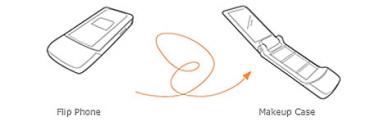
The background to the site looks interesting. Arising out of two research projects between the University of Montreal and Concordia University concerned with rapid prototyping and sustainable design. Here is their plan for the future:
"... Metacycling aims to define an alternative model of consumption based on product longevity. This concept, based on the rejuvenation of products through the use of distributed Rapid Prototyping technology, will be implemented by linking consumers and designers through an interactive framework and a process known as Participatory Design (PD). This process puts the designer and end user into direct contact and assures that user requirements are fully defined and taken into account.
There's no doubt that there are tremendous advantages to the creation of a virtual community: the exponential development of creative ideas or even the possibility of finding unexpected new vocations for widely distributed commercially successful products, now obsolete. Imagine the commercial and environmental benefits of giving new life to such products and the enthusiasm that this would generate amongst a virtual community of designers and users."
Participatory Design is a new term to me, seeming almost synonymous with Co-design.
The whole idea looks pretty well thought out to me, and I appreciate the simple premise for the competition and user collaboration. Hopefully will get involved before the end of June.
Flavour of the month: James Houston and his ZX Spectrum
This post is proud to have been syndicated to the Ponoko Blog.
If you haven't already been caught by the bug, do go and have a look at James Houston's video Big Ideas (Don't get any).
I'm feeling strangely proud as this latest wunderkind is from none other than the Glasgow School of Art. His video, utilising various discarded computer devices to perform a weird and wonderful arrangement of Radiohead's track, Nude., has been causing a sudden frenzy on various blogs and forums. His elegant synopsis:
"I grouped together a collection of old redundant hardware, and placed them in a situation where they're trying their best to do something that they're not exactly designed to do, and not quite getting there."
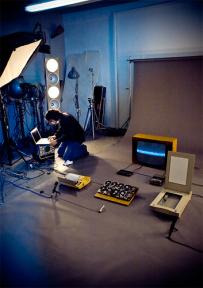
photo by James Houston
Never ones to miss a good scoop, the Creative Review interview Houston here. i was charmed to find that the artist's use of a ZX Spectrum for the guitar parts was no accident - he is as much a fan as the rest of us. And one thing he said really got me thinking:
"The high pitched noise at the start of the video is the sound of the spectrum loading (they loaded via audio tapes). You can load the beeping file into your spectrum at home just by playing the start of the video through it. That is, if you’re that way inclined."
Well, you know what? I'm pretty sure there are hundreds if not thousands that way inclined! If we look at those loading bleeps as the source code for Spectrum software, isn't that the most democratic form of source imaginable? Capable of being transmitted through none other than air itself, the code for a Spectrum program can be distributed insanely easily, and stored on any audio recording format. It is distributed inherently with the program and in order to even use the program one first has to listen to, experience, the source code itself.
So: What if we could share data for physical objects in this way? You could conceivably sing a kazoo into existence with a mic, a (souped up) spectrum and a 3D printer! For a music loving post-industrial designer, isn't this just heaven?
I will ask James on Thursday when the GSA Degree Show opens. If I can get close. And he may well look at me like I'm a nut.
Design that is Good?
This post is proud to have been syndicated to the Ponoko Blog.
via Core77
Alice Rawsthorn, International Herald Tribune design critic and former director of the Design Museum, gives her 5 point criteria for assessing design, from 'What it does' right through to 'guilt' - as she points out, the latter is a peculiarly contemporary consideration! It s a good wee read, a neat summing up that designers would do well to take heed of.
Particularly interesting are her thoughts on beauty and design:
Few things enrage design purists more than suggesting that good design is all about looks. It isn't. ... We've also grown suspicious of beauty in an era when we know that so many "beautiful" images are literally optical illusions, the result of digital retouching.
I am probably one of those design purists, as are many designers of a hacker/maker bent - much more concerned with the process and the outcome being primarily a result of functional considerations - a natural approach when one is designing at first for their own needs/desires. Presumably Rawsthorn is not as functionally purist given her damning of compact fluorescent light bulbs as "so ugly, both in themselves and their soulless light, that they couldn't possibly qualify as good design." Not an opinion that I agree with, but given in the context of this rather modern tug-of-war that now exists between beauty and guilt. Every consumer tussling daily with the questions of what they would have (for beauty's sake) versus what they should have (for the world's sake). She cites Tata's 1 lakh (100,000 rupees) Nano as a case in point: heralded by the makers as a humanistic innovation yet widely derided as an irresponsible environmental burden.
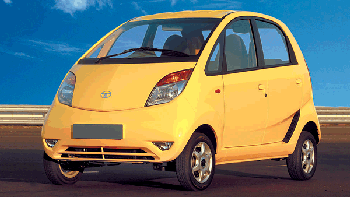
Tata's' 1 lakh car - good, bad or other? - image from Tata Motors
Its a complicated question, that of good design, and one for which the goalposts continue to change.
Fluidforms - tableware for the discerning prosumer.
This post is proud to have been syndicated to the Ponoko Blog.
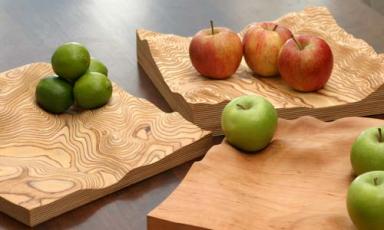
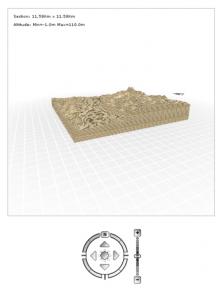
Austrian design firm Fluidforms have created Earth bowls: fruit bowls generated from Google Earth topographical data which is translated into physical form by CNC routing laminated beech - a cool concept undoubtedly, but the clincher for me is in the web interface. They say:
Our website enables you to design according to your own preferences with but a few clicks of the mouse. Create your own unique forms, and bring to life your own individual Design.
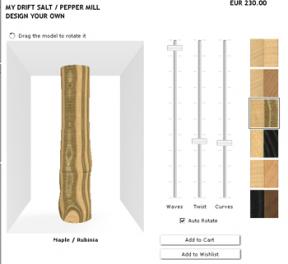
They're clearly into the idea of user-level customisation in the same sense that platformdesign.org are, giving the user just the right tools and amount of control to not get lost in the experience of defining their product's form (without altering the function). So have a go at designing your own Earth bowl here. In addition to that, one can also customise the form, colours and materials of their own salt/pepper seller, candlestick and pestle.
The interfaces are wonderfully straight forward and really shows how important the interactive, or service design aspect is to offering customisation at the point of sale. Here's me designing my Glasgow fruit bowl (I never summoned up the courage or funds to hit 'Add to cart'!), and a DRIFT salt/pepper seller below that.
Other interesting projects from Fluidforms are:
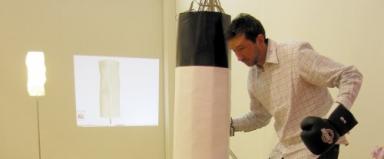
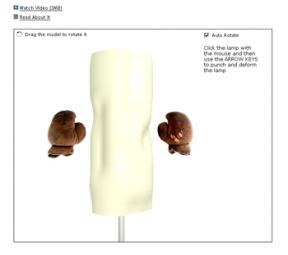
Customers design with their fists - Orginally an installation using a punchbag to alter the form of a lamp, the site has a Flash version of the same (far bottom).
Fingerprint sculptures - Using a fingerprint scan to create a unique 3D form.

Fluidforms appears to be the brainchild of consultancy firm Formatory which enigmatically offers 'prosumer solutions'.
UPDATE: I remembered what led me here! It was in fact Scott Johnston's own version of topographical CNC'd bowls. He just 'wrote some programs' to help get from a google map to a bowl. Showoff!
Engrave your heart out
This post is proud to have been syndicated to the Ponoko Blog.
I had no idea one could use a laser to engrave so many things. Joe Mansfield offers you the chance to engrave anything, be it laptop, phone or Moleskine - yes, Moleskine, and they come out a rather nice sepia too. It started with Engrave your tech, dealing purely in engraving peoples' gadgets, and now you can buy ready engraved Moleskines over at Engrave your book.
Mansfield also accepts submissions for designs from artists, offering 15% royalties on every purchase. There are some really impressive pieces on display on the Engrave your tech website, and over at their Flickr account - from the ornate, to superfine Beatles, to tongue-in-cheek cartoonism!
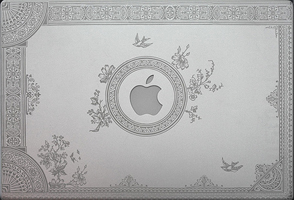
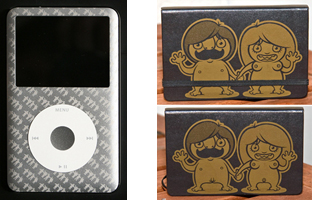
Images from Engrave your tech
This is mass customized, manufacture-on-demand in practise, albeit at a basic entry level platform, made possible by the recent affordability of laser cutting/engraving.
Reprap in reproduction shocker
This post is proud to have been syndicated to the Ponoko Blog.
According to the Reprap website, Reprappers at the University of Bath, UK, have succeeded in making a rapid prototyper reproduce itself for the first time.
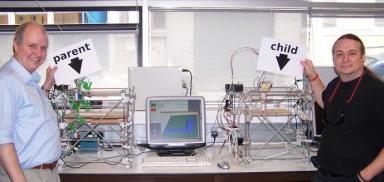
Adrian Bowyer (left) and Vik Olliver (right) with a parent RepRap machine, made on a conventional rapid prototyper, and the first complete working child RepRap machine, made by the RepRap on the left. The child machine made its first successful grandchild part at 14:00 hours UTC on 29 May 2008 at Bath University in the UK, a few minutes after it was assembled. image: http://reprap.org
The University of Bath's press release states:
"The materials, plus the minority of parts that the machine cannot print, cost about £300. All those non-printed parts can be bought at hardware shops or from online stores."
So if we're going to be picky, no it hasn't actually replicated itself in entirety - what has been achieved is that the Reprap design is now sophisticated enough to reproduce all its plastic parts, which were initially produced for the parent model by a conventional 3D printer. I like that the test of success is for the child Reprap to make the first component of its offspring Reprap - A highly accelerated world, this where generations are separated by just minutes! The successful reproduction was achieved by Adrian Bowyer and Vik Olliver, who also founded the Reprap project just 3 years and 2 months ago! Again, not bad as evolution goes, and I'm sure Reprap's current namesake would be proud!
Now its time to make your own. Good synopsis of the project, as ever, at Wikipedia.
The parent and child Repraps will be on display from the 4th June (today) to the 8th June at the Cheltenham Science Festival, if you're down that way.
Via Neel
UPDATE: Thanks to =ml= for pointing out Reprap's own showroom on Ponoko where one can have parts for the Darwin Reprap cut and delivered by Ponoko.
Pamoyo - a bit of open source clothing with a bit of recycling.
This post is proud to have been syndicated to the Ponoko Blog.
The strangely similarly named Pamoyo are "a fashion label with green vision and creative edge", releasing their designs under Creative Commons licenses for non-commercial use. Although the source isn't on the website yet, the shop is online: A V-neck tee will set you back a not unreasonable 35 Euros.
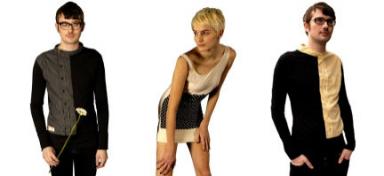
Pamoyo are apparently the first label to apply an open source model using Creative Commons, the non-commercial share-alike license presumably meaning that they won't be able to commercialise any adaptations by users without their permission. So the model is really one of personal customisation rather than developing manufacturable products.
I particularly like their materials policy: Pieces are made from a mixture of organic cotton and scraps of vintage material, and it looks like each unique piece will be listed on the site, so that one searches by size and 'base colour', then picks the most suitable option. Can they adopt a Ponoko model of more localised manufacturing points so that those vintage scraps might be from clothes you gave to the local charity shop last month?
Downloadable pinhole cameras from Readymech/Corbis
This post is proud to have been syndicated to the Ponoko Blog.
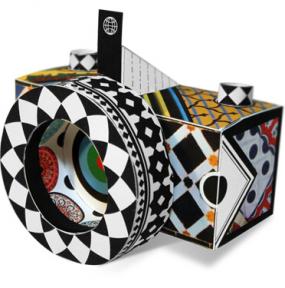

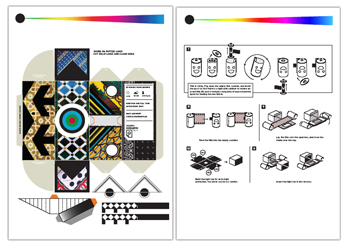
Stock photography site Corbis have 4, soon to be 5, pinhole cameras to download, print out, stick onto card and build yourself.
The cameras were designed by New York graphic firm Fwis, who are also responsible for the Readymech downloadable toys that Steven is fond of. These babies look just as much fun for adults to play with as the Readymech toys are for kids. There are some really off the wall looks to the pinhole cameras, all beautifully and colourfully decorated with names like Dr. Livingstone, Pablo, and Astrocam (left to right, below).
The source for each camera is available as a pdf file that can be printed directly onto photo paper, then glued to a cereal box before cutting out and assembling. The full list of materials needed:
• Several sheets of good printer paper
• One regular cereal-box for the light-safe
interior
• An pen knife or razor blade for cutting
• Some double-sided tape or glue
• Thin needle for making a pinhole
• Small piece of aluminum foil or soda can
to puncture with the needle
• One new roll of film, preferably ISO200
• One film canister from which the film has
been removed. You can empty a new roll,
or get an empty canister from any photo
developer
Included in the .pdf are detailed instructions for building, taking photos and processing them. All in all a comprehensive, fun and educational package!
Incidentally, Fwis' site is a joy to navigate, being 'strangefiltered' by such criteria as 'we didn't get paid' and 'client didn't get it'. These guys must have a laugh.
Getting precious abour skateboards
This post is proud to have been syndicated to the Ponoko Blog.
I was clearly too quick off the mark with my previous post on Piotr Woronkowicz's laser engraved skateboards - there are many more out there:
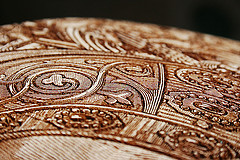 Steven reported back in August on the refill 7 show with boards from 80 different artists.
Hate to mention them again, but Platformdesign.org commented on that exhibition that:
"The medium is compelling, the method is pretty but pointless, making the works less skate than art"
while generator-x commented that:
"There doesn’t seem to be any computational pieces, so in that sense the uniquely digital nature of the technology has been passed over."
It does seem that when artists elect for new technologies, they open themselves up to a huge amount of criticism for why and how they are doing so. So in the case of laser engraved skateboards there is some expectation that the artist would have a 'point' to using laser-engraving, or that the content should be in some cases 'computational'. Is this a fair expectation?
It is if you're an industrial designer, because we're constantly hyper-aware of functional matters and taught from the outset to justify every decision. I often think that this hampers me from explorations that I would like to make. I think there's a lot to be said for removing yourself from this mindset in order to simply experience, say, designing for a new technology. I expect in the case of the Refill 7 exhibition, many artists might have learnt a great deal new from trying their hand at a new medium, an education that could easily feed into their future work.
 Indeed, Wired at the time reported that "photo-quality 1,200-dpi etchings" were achieved, a level of detail that I doubt many industrial designers would be able to exploit fully - perfect however for illustrators. In fact, I would (perhaps lazily) opt for computational methods to generate artwork this detailed, and I was similarly slightly disappointed that none of the Refill 7 pieces seemed to be done this way. It is surely only something that would bother an industrial designer.
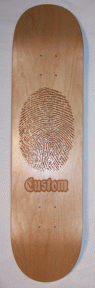
One group that might be thinking in a more conceptual vein is Customsk8boards, with their fingerprint board. For $109 you can have your fingerprint blown up and engraved onto your deck, a process that is no doubt eased by computer and laser engraving technology.
If we're designing for customisation we have to accept that those doing the customisation might not hold the same values that we do. Although we might want to push the boundaries of laser etching by generating artwork in a more computational way, others might see the boundaries as being in other areas.
Although many have assumed these boards are for the collector's market, one artist, Ionescu, himself said,
"I'm having a hard time thinking they're going to be ridden and destroyed, but their purpose is to be ridden, so their fate lies with their owners."
His board is shown in detail above. To him, these boards are pretty, but definitely not pointless. Maybe its all about how we choose to value something that is confusingly both beautifully intricate and infinitely reproducible.
via platformdesign.org
via make
Liverpool: The Open Source City
This post is proud to have been syndicated to the Ponoko Blog.
 As you may or may not know, Liverpool is European Capital of Culture 08, which means that this year there's even more than usual going on there.
One such example is Open Source City, "A micro-festival of open source practice in the production of media art and music". This from the organisers' newsletter:
20th - 22nd June 2008
Booking is now open for _Open Source City, folly and SoundNetwork's exciting micro-festival in Liverpool this June. Most of the art and events are free and you can just turn up on the day, but for the programme of workshops and masterclasses you need to book in advance.
Places are limited, so book early to avoid disappointment..!
Open Source City tips its hat to Liverpool's pioneering spirit by offering a programme of art, workshops, masterclasses, talks and concerts that shed light on the growing impact of Free/Libre Open Source Software on the creative practices of today, in particular in media art and music.
Download the full programme and find out how to book your place on the workshops at folly's website http://www.folly.co.uk/click/1060/11
Although there are a lot of events aimed at programmers and music makers (great!), there are talks discussing open source culture and particularly its continuing effect on art and design. Tom Chance's talk Copyright and freedom – a brief philosophical tour looks to be good, as does Daniel James talking on his experiences of the effect for users of open sourcing in the Indamixx hand-held studio project.
Folly are really active and every year put on their own festival for the Northwest, Velocity which always has a good showing of innovative digital manufacturing in both visual and interactive art pieces, as well as a good line in hardware hacks. Would recommend getting along to either festival if you can.
Looking at Platform Design
This post is proud to have been syndicated to the Ponoko Blog.
"The world is not ready for mass customization on a grand scale. Presented with the choice of ‘anything’, most people will be overwhelmed and simple draw a blank. To both educate and react to this reality, platform design give a basic starting point, a first step in moving to a mass customized world."
These are the words of Ken Oiling of Norwegian design house MELD. We reported on MELD last month as they announced their first product, a chair, launching this September at London Design Week. But as with any addition to the already swollen ranks of design methodologies, it is worth asking what Platform design actually means.
Oiling goes into some detail on the philosophy behind Platform design, billing it as a precursor to mass customisation proper. It will be interesting to see how this is actually translated into reality, but until then MELD give their three step process as follows:
1. Design a product for customization by both designers and users, allowing for maximum flexibility. The system must include manufacturing and logistics specifications, addressing sustainability and performance specifications.
2. Take this design/system and give it to other creatives to play and build with. Allow them to push the boundaries of the system and express themselves to their fullest. We believe this in turn will inspire the general population to use the system for their own visions.
3. Finally and most importantly; allow the final customization (regardless of designer) to be done by the buyer of the product. Allow them to decide the final expression or function of the product.
So it seems, the idea is that the originator does some initial design, passes it on to other designers to remix, using the technical skills and resources that they have on tap, before the product is customised by the end user. Its a good model for the current climate, where design tools are on the way to democratisation, but not pervasive enough to be used by every end user. So why not pass the design around those that you know can do something with it, before opening it up to the world, which might not know quite what to do with it!

image from meld.com
Great, As long as these tasty looking chairs don't just get snapped up by a whole lot of other collector/designers before they get a chance to thrive in the wider community - it also remains to be seen how the end user will be facilitated to "decide the final expression or function of the product" - Choice of paint schemes? Blank canvas? Cutting templates?
For more, Platformdesign.org is a website that Ken also contributes to that covers the Platform design and its practitioners in more detail. They have a well written article relating platform design to service design, which carries this choice nugget from 1960s philosopher, Marshal Mcluhan:
“As technology advances, it reverses the characteristics of every situation again and again. The age of automation is going to be the age of ‘do it yourself’.”
The parallels between the Platform method and service design are clear - it can really be seen as a contemporary way of relating industrial design with the values of user-centred service design. This is surely a good thing as for one, it gives new life to the activity of industrial design in service-centred economies, and secondly, it could hopefully help to repair the threatening gap between service design and industrial design.
Via Padraig.
Ubuntu Founder on Open Source and Commercialism
This post is proud to have been syndicated to the Ponoko Blog.

The Guardian newspaper (UK) published a good interview with Mark Shuttleworth in their Technology supplement yesterday. He talks about the relationship between his company, Canonical, and the open source GNU/Linux-based operating system, Ubuntu. Dell have recently started to ship computers with Ubuntu. You can read the full interview here. An excerpt:
"Our business model is entirely based on services around our software. Because Canonical plays such a key role in Ubuntu, even though it doesn't monopolise access to it, we're a preferred partner for Ubuntu. Whether it's technical support, which we think people are more likely to buy from us than from anybody else, or whether it's engineering, customisation, or the enablement of the platform on particular hardware, Canonical has a privileged position."
Shuttleworth puts forward an interesting argument for how businesses can function around an open source product (although he concedes that Canonical is not yet breaking even, saying, "We've positioned ourselves for what we see as the future of software ... if we are the company that has best anticipated that future, then we will be best positioned to benefit from it." So I guess we'd better be confident in the future of open models.
As I have touched on before, it would seem that the business case for open source products is more about quality of services such as support, manufacturing and distribution, and expertise (look at LadyAda/Adafruit), more than simply being the first in there . Although in Canonical's case, it obviously helps that they have been responsible for much of the development of Ubuntu!
Something new that I recently learnt about Ubuntu, is that there are several different variants available, including Ubuntu Studio, a multimedia-creation flavor of Ubuntu. Great to see developers customising/optimising a source product for specific users. Maybe this is how we can move rapidly towards more personal, appropriate products.
Subscribe to:
Posts (Atom)