Saturday, June 21, 2008

Downloadable pinhole cameras from Readymech/Corbis

This post is proud to have been syndicated to the Ponoko Blog.

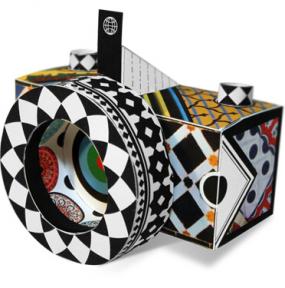
a Corbis readymech downloadable pinhole camera

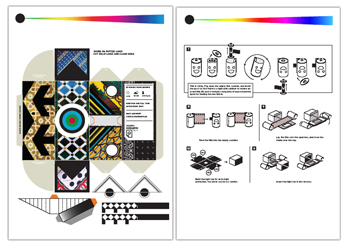
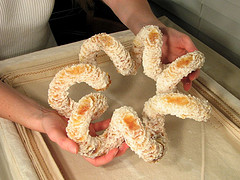
Stock photography site Corbis have 4, soon to be 5, pinhole cameras to download, print out, stick onto card and build yourself.

The cameras were designed by New York graphic firm Fwis, who are also responsible for the Readymech downloadable toys that Steven is fond of. These babies look just as much fun for adults to play with as the Readymech toys are for kids. There are some really off the wall looks to the pinhole cameras, all beautifully and colourfully decorated with names like Dr. Livingstone, Pablo, and Astrocam (left to right, below).


Corbis' readymech cameras

Example source for downloadable cameras

The source for each camera is available as a pdf file that can be printed directly onto photo paper, then glued to a cereal box before cutting out and assembling. The full list of materials needed:


• Several sheets of good printer paper

• One regular cereal-box for the light-safe

interior

• An pen knife or razor blade for cutting

• Some double-sided tape or glue

• Thin needle for making a pinhole

• Small piece of aluminum foil or soda can

to puncture with the needle

• One new roll of film, preferably ISO200

• One film canister from which the film has

been removed. You can empty a new roll,

or get an empty canister from any photo

developer


Included in the .pdf are detailed instructions for building, taking photos and processing them. All in all a comprehensive, fun and educational package!

Incidentally, Fwis' site is a joy to navigate, being 'strangefiltered' by such criteria as 'we didn't get paid' and 'client didn't get it'. These guys must have a laugh.

Getting precious abour skateboards

This post is proud to have been syndicated to the Ponoko Blog.

I was clearly too quick off the mark with my previous post on Piotr Woronkowicz's laser engraved skateboards - there are many more out there:


Ionesco's board fro refill 7Steven reported back in August on the refill 7 show with boards from 80 different artists.

Hate to mention them again, but Platformdesign.org commented on that exhibition that:


"The medium is compelling, the method is pretty but pointless, making the works less skate than art"


while generator-x commented that:


"There doesn’t seem to be any computational pieces, so in that sense the uniquely digital nature of the technology has been passed over."


It does seem that when artists elect for new technologies, they open themselves up to a huge amount of criticism for why and how they are doing so. So in the case of laser engraved skateboards there is some expectation that the artist would have a 'point' to using laser-engraving, or that the content should be in some cases 'computational'. Is this a fair expectation?


It is if you're an industrial designer, because we're constantly hyper-aware of functional matters and taught from the outset to justify every decision. I often think that this hampers me from explorations that I would like to make. I think there's a lot to be said for removing yourself from this mindset in order to simply experience, say, designing for a new technology. I expect in the case of the Refill 7 exhibition, many artists might have learnt a great deal new from trying their hand at a new medium, an education that could easily feed into their future work.


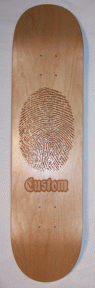
Fingerprint board from customsk8.comIndeed, Wired at the time reported that "photo-quality 1,200-dpi etchings" were achieved, a level of detail that I doubt many industrial designers would be able to exploit fully - perfect however for illustrators. In fact, I would (perhaps lazily) opt for computational methods to generate artwork this detailed, and I was similarly slightly disappointed that none of the Refill 7 pieces seemed to be done this way. It is surely only something that would bother an industrial designer.


One group that might be thinking in a more conceptual vein is Customsk8boards, with their fingerprint board. For $109 you can have your fingerprint blown up and engraved onto your deck, a process that is no doubt eased by computer and laser engraving technology.

If we're designing for customisation we have to accept that those doing the customisation might not hold the same values that we do. Although we might want to push the boundaries of laser etching by generating artwork in a more computational way, others might see the boundaries as being in other areas.


Although many have assumed these boards are for the collector's market, one artist, Ionescu, himself said,


"I'm having a hard time thinking they're going to be ridden and destroyed, but their purpose is to be ridden, so their fate lies with their owners."


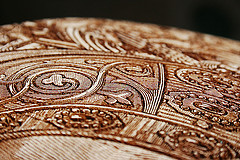
His board is shown in detail above. To him, these boards are pretty, but definitely not pointless. Maybe its all about how we choose to value something that is confusingly both beautifully intricate and infinitely reproducible.

via platformdesign.org


via make

Liverpool: The Open Source City

This post is proud to have been syndicated to the Ponoko Blog.

Open Source CityAs you may or may not know, Liverpool is European Capital of Culture 08, which means that this year there's even more than usual going on there.


One such example is Open Source City, "A micro-festival of open source practice in the production of media art and music". This from the organisers' newsletter:


20th - 22nd June 2008


Booking is now open for _Open Source City, folly and SoundNetwork's exciting micro-festival in Liverpool this June. Most of the art and events are free and you can just turn up on the day, but for the programme of workshops and masterclasses you need to book in advance.


Places are limited, so book early to avoid disappointment..!


Open Source City tips its hat to Liverpool's pioneering spirit by offering a programme of art, workshops, masterclasses, talks and concerts that shed light on the growing impact of Free/Libre Open Source Software on the creative practices of today, in particular in media art and music.


Download the full programme and find out how to book your place on the workshops at folly's website http://www.folly.co.uk/click/1060/11


Although there are a lot of events aimed at programmers and music makers (great!), there are talks discussing open source culture and particularly its continuing effect on art and design. Tom Chance's talk Copyright and freedom – a brief philosophical tour looks to be good, as does Daniel James talking on his experiences of the effect for users of open sourcing in the Indamixx hand-held studio project.

Folly are really active and every year put on their own festival for the Northwest, Velocity which always has a good showing of innovative digital manufacturing in both visual and interactive art pieces, as well as a good line in hardware hacks. Would recommend getting along to either festival if you can.

Looking at Platform Design

This post is proud to have been syndicated to the Ponoko Blog.


"The world is not ready for mass customization on a grand scale. Presented with the choice of ‘anything’, most people will be overwhelmed and simple draw a blank. To both educate and react to this reality, platform design give a basic starting point, a first step in moving to a mass customized world."


These are the words of Ken Oiling of Norwegian design house MELD. We reported on MELD last month as they announced their first product, a chair, launching this September at London Design Week. But as with any addition to the already swollen ranks of design methodologies, it is worth asking what Platform design actually means.


Oiling goes into some detail on the philosophy behind Platform design, billing it as a precursor to mass customisation proper. It will be interesting to see how this is actually translated into reality, but until then MELD give their three step process as follows:


1. Design a product for customization by both designers and users, allowing for maximum flexibility. The system must include manufacturing and logistics specifications, addressing sustainability and performance specifications.


2. Take this design/system and give it to other creatives to play and build with. Allow them to push the boundaries of the system and express themselves to their fullest. We believe this in turn will inspire the general population to use the system for their own visions.


3. Finally and most importantly; allow the final customization (regardless of designer) to be done by the buyer of the product. Allow them to decide the final expression or function of the product.


So it seems, the idea is that the originator does some initial design, passes it on to other designers to remix, using the technical skills and resources that they have on tap, before the product is customised by the end user. Its a good model for the current climate, where design tools are on the way to democratisation, but not pervasive enough to be used by every end user. So why not pass the design around those that you know can do something with it, before opening it up to the world, which might not know quite what to do with it!


A Platform


image from meld.com


Great, As long as these tasty looking chairs don't just get snapped up by a whole lot of other collector/designers before they get a chance to thrive in the wider community - it also remains to be seen how the end user will be facilitated to "decide the final expression or function of the product" - Choice of paint schemes? Blank canvas? Cutting templates?


For more, Platformdesign.org is a website that Ken also contributes to that covers the Platform design and its practitioners in more detail. They have a well written article relating platform design to service design, which carries this choice nugget from 1960s philosopher, Marshal Mcluhan:


“As technology advances, it reverses the characteristics of every situation again and again. The age of automation is going to be the age of ‘do it yourself’.”


The parallels between the Platform method and service design are clear - it can really be seen as a contemporary way of relating industrial design with the values of user-centred service design. This is surely a good thing as for one, it gives new life to the activity of industrial design in service-centred economies, and secondly, it could hopefully help to repair the threatening gap between service design and industrial design.

Via Padraig.

Ubuntu Founder on Open Source and Commercialism

This post is proud to have been syndicated to the Ponoko Blog.

Ubuntu/Canonical


The Guardian newspaper (UK) published a good interview with Mark Shuttleworth in their Technology supplement yesterday. He talks about the relationship between his company, Canonical, and the open source GNU/Linux-based operating system, Ubuntu. Dell have recently started to ship computers with Ubuntu. You can read the full interview here. An excerpt:


"Our business model is entirely based on services around our software. Because Canonical plays such a key role in Ubuntu, even though it doesn't monopolise access to it, we're a preferred partner for Ubuntu. Whether it's technical support, which we think people are more likely to buy from us than from anybody else, or whether it's engineering, customisation, or the enablement of the platform on particular hardware, Canonical has a privileged position."


Shuttleworth puts forward an interesting argument for how businesses can function around an open source product (although he concedes that Canonical is not yet breaking even, saying, "We've positioned ourselves for what we see as the future of software ... if we are the company that has best anticipated that future, then we will be best positioned to benefit from it." So I guess we'd better be confident in the future of open models.


As I have touched on before, it would seem that the business case for open source products is more about quality of services such as support, manufacturing and distribution, and expertise (look at LadyAda/Adafruit), more than simply being the first in there . Although in Canonical's case, it obviously helps that they have been responsible for much of the development of Ubuntu!

Something new that I recently learnt about Ubuntu, is that there are several different variants available, including Ubuntu Studio, a multimedia-creation flavor of Ubuntu. Great to see developers customising/optimising a source product for specific users. Maybe this is how we can move rapidly towards more personal, appropriate products.

Friday, May 23, 2008

Evil Mad Scientists Post Junk

This post is proud to have been syndicated to the Ponoko Blog.

One of my favourite blogs for odd-making-in-a-borderline-electronic-industrial-design-vein is that of the Evil Mad Scientist Laboratories. Most of what Windell and Lenore post is far from junk, but select persons will soon be receiving a box full of the stuff in the mail as part of their new game, snappily entitled 'The Great Internet Migratory Box Of Electronics Junk'.


The Great Internet Migratory Box Of Electronics Junk


Described by Lenore as 'a progressive lending library of electronic components', the idea is to send around a box full of junk that may inspire a new project. The recipients remove as many items as they wish, and replace them with new ones, then add some names to the book in the box before sending the whole thing on to someone else in the book. Its a beautiful idea for collaboration through physical and virtual networks (results will be posted on each of the participants' websites), and a great way to approach a new project or get an angle on an existing one.


Candyfab results by EMSL


The Evil Mad Scientists are no strangers to innovation and seeing beauty in the details: They are the minds behind Candyfab, the open source 3D printer that uses sugar as a building medium. DIY, cheap(er) and smells like caramel when you're printing!


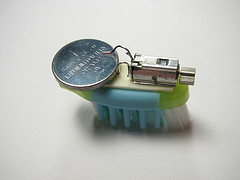
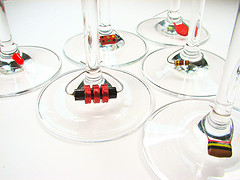
A Bristlebot Component Wine Charms

EMSL are also great at matching bits of hardware with new functions in really creative ways, such as their component wine charms (above) and their really, really simple motor, and their hugely successful Bristlebots, miniature motivators from Toothbrush heads and mobile phone motors (also above). Best of all, the Evil Mad Scientists are all about open source, so all their projects are explained with painstaking lucidity for others to recreate.


All images from Oskay's Flickr photostream

Open Source products on a grand scale

This post is proud to have been syndicated to the Ponoko Blog.

So you thought you’d seen every open design project on the web? No? Well, I did, and then I came across the Mini-650 racing yacht project.Hans Zwakenberg, of mini-650 says:


“Designing a Mini-650 racing yacht as a group effort, using the Internet as the enabling technology to bind a group of interested individuals together, is what this site is all about. As far as I know, this project is one of the very first to try and apply this development concept to the fascinating world of racing yacht design.”


Not being a naval architect, I don’t understand a lot of the downloads, but I’ll take Hans’ word for it! Then again maybe no one else could decipher them either as the project doesn’t appear to have been that active of late. Its there to be picked up.


Other notably ambitious open design projects include two cars (OScar, with a great website, and the Open Source Green Vehicle, with a perplexing one), a house and a surf kite project (Zeroprestige kite, which alas is no more, as the protagonists went onto even greater things, like starting Instructables.com).


OScar


OScar Concept by Tiago Do Vale


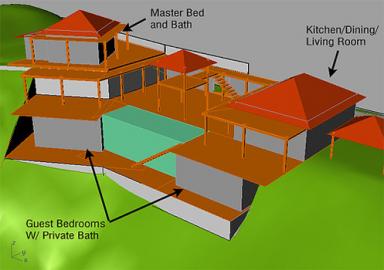
OS House


Open Source House concept by Rahm Rechtschaffen


Its one thing sharing designs for lamps and furniture, but how can it be feasible on projects such as cars and boats? A similar problem faces the open source software community when they build an operating system. And similarly, the way to do it seems to be in breaking the project up into manageable chunks, not rushing, and lots and lots of discussion! But with the grandest projects come the grandest and most inspirational statements, such as this from the OScar manifesto:


" [To] build a car without engineering center, without a boss, without money, and without

borders… but with the creative help of the internet community – that is the meaning of

empowerment, the meaning of challenge, and the initial reason for the internet."


These projects are all currently at an early stage and perhaps at the best stage to get involved, although given their wide scope, also likely to branch off into new projects in the future.

Mechanisms, Automata and Ponoko

This post is proud to have been syndicated to the Ponoko Blog.

For those of you new to automata, these are mechanical toys or sculptures that, when cranked or motorised, re-enact movements through a system of mechanical processes, such as cranks, cams and gears. The results are often beautifully presented and can be quite beguiling, such as this one from Philip Lowndes, Quiet Contemplation of a Sandwich (check out the videos here).


Philip Lowndes' automata


Some makers are already using Ponoko to create working mechanisms, and the laser cutting process seems quite appropriate for making most of the elements of automata, which have to be precisely crafted, often from wooden board. What’s more, there are a host of resources for the budding automata builder on the web.


The Make blog led me the Cabaret Mechanical Theatre’s modular automata kit – a collection of wooden pieces that can easily be put together to form your own automata, while learning about the mechanical principles most commonly used in the devices. The Cabaret Mechanical Theatre once had premises in London’s Covent Garden, which are sadly no more, but the group continues an online presence, selling kits, books and exhibiting online the work of automata makers such as Paul Spooner, Carlos Zapata and Tim Hunkin, whom I have previously blogged about.


The first stop for automata info must be the Automata and Automaton Blog, Dug North's very well updated chronicle of automata on the web. He offers some great resources for those of you interested in new mechanisms and often link to the Sands Museum, an online museum of industrially produced mechanisms, catalogued in some detail. Check out Philip Lowndes' Anatomy of an Automaton for some insight into his craft.

There’s a good line in plans for automata from cardboard too, including these at the Cabaret Mechanical Theatre shop and these at Flying pig.


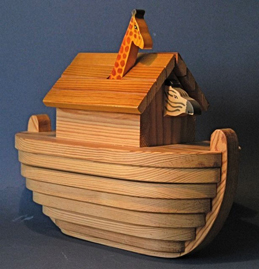
Philp Lowndes' Noah's Ark puzzle

Incidentally, a puzzle just calling out to be laser cut is Lowndes' Noah's Ark, the plans for which can be bought here.

Beware: automata can be addictive!


Images by Philip Lowndes

Sunday, May 18, 2008

Cardboard Design a-go-go

This post is proud to have been syndicated to the Ponoko Blog.

Further to John's recent post about Ruit Keenan's cardboard furniture, I got thinking a bit more on the subject of this ubiquitous material. Long time favourite of bodgers and school craft departments, it has a perhaps unfair reputation for shoddiness. But it is its very transient nature, this tendency to degrade, that makes it such an alluring candidate material for the sustainability-minded furniture designer. And why it is one of the prime materials for packaging, being discarded in vast quantities when product has reached recipient (I can't begin to effectively communicate the festering relationship I have with moulding Ikea box carcasses in my backyard). Hence, if it can be caught at that moment and upcycled into even a very temporary piece of furniture, it's surely a good thing. But there are plenty of examples of cardboard furniture designed to last a long time indeed.


The other great thing about cardboard is that it is warm, its textural, easily printed on, and one of few materials that everyone interacts with on a daily basis: We've all played with and explored it, even if it was as a two year old and it was that box that the train set came in!


Treehugger recently reported on a project carried out by students of the University of Idaho, and rounded it up. with links to many other of their articles on cardboard items. Some great manipulation of the material there.


Foldshool Stool


Of course, the 2D nature of cardboard also makes it ideal for open source design, as the data for a net can very easily be shared, understood and transferred to the object. Foldschool is a project that does just this for kids' furniture. To quote from their press release:


Each fragment of the pattern can be printed

out on DIN A4/US letter or on DIN A3/Tabloid.

Therefore the pattern charts can be manufactured

everywhere. The assembly of the furniture requires only

easily available tools and devices: cutter, ruler, folding tool,

cutting mat, spray adhesive, needle, glue and masking tape.


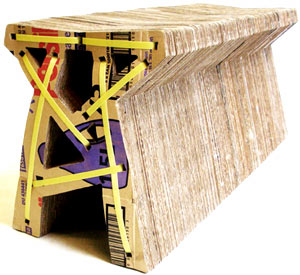
Raw Bench


Another great piece is Jason Iftakhar's cardboard bench from a couple of years back. Jason's bench was designed to be produced from the bailing machines already used in supermarkets to discard cardboard. Its a really well executed bit of design for manufacture!


If you liked this, check out the Treehugger article as there is much, much more in the world of cardboard items.

Saturday, May 17, 2008

Why open design is a ruthless ideal

This post is proud to have been syndicated to the Ponoko Blog.


So how can a designer make money in the open source model? If we're giving away our IP for free, what else can we charge for? Firstly, there's no tenet that says one must give away ones designs for no money for it to be free. We're talking 'free' as in 'freedom' here so we can still charge customers to buy our design source - the freedom comes in what license you give to the customer once they have the source. Traditionally, buying a product grants you no freedoms over developing it - you're not blocked from hacking a piece of furniture, say, but you're not facilitated either (in fact many gadgets do bar the user from opening them, sometimes for good reason) - and you'd certainly be in trouble if you tried to manufacture and market your own derived version. So in selling open design source documents you grant the customer the right to make derivative works, and, optionally, to market those works. More about that later.

In the case that a designer gives away their source documents for free, the onus to make money is put squarely on the manufacturing and marketing stages of product development. This makes great sense as a driver of good design as good design is essentially about optimisation for both production and for the user experience (if this is great, the product can almost market itself). And if the design source is free, more developers are likely to contribute, making for a bigger crowd designing the product, which may or may not be a good thing. So for this crowd of designers giving away their IP for free to get any remuneration, they have to be on the payroll of the company making and selling the product, ie. in-house designers. Why would any company pay designers who will happily give away their work for free? The only reason must be that it is the only way to ensure great design, and to ensure that the next great design comes from one of their designers. This is clearly a rather idyllic situation in one sense: being paid to simply design as we please. In another it is hellish, as the criteria for the designer to get paid is not a case of simply putting the hours in, but of being on top of the game, and doing good design constantly. Its a Free as in Beer model and as such, only works if you can hook manufacturers on the quality of your future work. Those who can do this would be in a prime position in the job market. Those who can't are left to design simply for fun. If they can afford to have fun.

Design wins, good designers win, users win, bad designers lose.

As a freelance designer then surely it makes more sense to sell your design source for a fee, as otherwise there is no way to ensure any income. Any company could grab your design source and sell thousands of units with no obligation to give you a penny. Whichever way you look at it, it seems that it does not pay well to be a freelancer in the open design world. Unless you are also manufacturing.

It is when we consider the manufacturing that the position of freelance maker makes a whole lot of sense: In any form, open design will always encourage a competitive market between manufacturers: When we can all make and sell the same product, the competitive edge must come from how well we do it: this means sustainability, economy, locality, appropriateness, inclusivity, accessibility, customer relations. All the criteria by which a manufacturer is judged by we users. When the manufacturer cannot claim a monopoly on manufacturing a product, they have to compete on the stuff that really matters to the customer.

Society wins, good manufacturers win, customers win, bad manufacturers lose.

I have assumed in the last few paragraphs that all design source is distributed under a license that permits commercial use. Of course this does not have to be the case. In fact we do not have to look far for examples of open design which denies commercialisation by anyone other than the originator: Its called co-design, mass customisation, user-led design, beta testing. Its what all the manufacturers are doing now: opening up to a user/developer community while retaining their exclusive claim over a product. Its not really 'free' as in 'freedom' and its only tenable until the day that the fabrication technology needed to convert design source into a personal product is in our homes.

Image by TheAlieness GiselaGiardino

Tuesday, May 13, 2008

Phil Torrone's favourites from Maker Faire

This post is proud to have been syndicated to the Ponoko Blog.

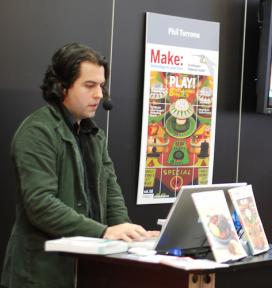
Boingboingtv has a good video up in which Phil Torrone, editor of Make magazine, shows us some of his favourite projects from Maker Faire 2008 last weekend. These include soft toy electronics, 'fablabs' and the "brain machine". Phil comments a little on the links between the maker movement, the affordablilty of digital fabrication, and the future of product personalisation.

Its good to get a little insight into the goings on at Maker Faire when I'm stuck over on this side of the atlantic - there's such a vibrant network of makers out there, hopefully one day I'll be able to attend a Maker faire myself!

Phil Torrone
Update:

There's also an interesting perspective from the businessmen at Forbes.com here. Some chat with Make magazine, Bleep Labs and Mitch Altman on the reasoning behind DIY product success stories. The emphasis on the need for building a product community and sharing (and thus flexible licensing I surmise) is interesting.

The mysterious appeal of the competition

This post is proud to have been syndicated to the Ponoko Blog.

It’s interesting how the indie design community respond so well to competitions: Clearly, we need briefs to flourish, we need constraints. The response to last month's Ponoko competition is a case in point. So it’s no surprise that brands keep hurling them at us.
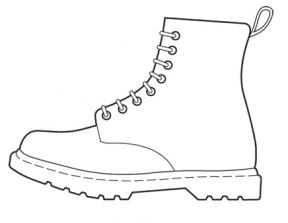
Doc Marten’s is one of the latest with their Freedm campaign, a website that allows you to decorate your own Doc Marten’s boot with the chance of having your design made up for sale (via Core77). This is one of many similarly enticing yet constrictive competitions in which getting your entry manufactured is still ultimately down to chance. At least customisation frameworks such as those offered by Nike, Etnies, and Timbuk2 guarantee some return on your investment of design time and effort, and some offer more freedom.
A Doctor Marten

The cynical side of me sees these competitions as, at worst, simply an attempt by brands to get a lot of ideas for virtually no effort or cost. At best, they might be a means of gaining publicity by jumping on the DIY/open design bandwagon. But maybe they’re genuinely part of the movement and a necessary framework for indie designers to work within. However, if this is the case, it would still be nice to have more opportunity to recover some expenses than relying on the chance that one is going to win. How can we stop ourselves being exploited like this?

I suspect the answer is that these competitions and services are really aimed at facilitating design by the 'non-designers' discussed by Dave here. For more experienced designers, brand-led competitions such as the Muji design award, attract a great deal of interest, presumably because the briefs are so much wider open. Still, surely our time would be better spent directed towards projects that have more grassroots social impact, or that we at least have the means of building or marketing ourselves, such as those found on Thinkcycle? Sadly, this repository (and others) of collaborative, appropriate design, that offers the same reward of having one’s designs become reality, has been significantly less subscribed to.

It seems we relish constraints, while demanding a certain minimum of freedom, and the balance between these determines to what extent we are designers or 'non-designers'. However, whichever we are, it seems that we are ultimately mostly interested in prestige.

Lee Krasnow: Small puzzles, big conundra from a big saw

This post is proud to have been syndicated to the Ponoko Blog.

Since we’re talking about puzzles and games, I thought it was worth pointing out Lee Krasnow. Lee is a puzzle-maker from San Francisco, and creates some awesomely perplexing objects! There is a great interview with him over at makezine, in which he talks the viewer through some of his puzzles and introduces us to his method of working.
Lee Krasnow

Lee Krasnow 2-in-1 Puzzle


Lee Krasnow (above, makezine) and one of his puzzles, 2-in-1 (below, pwdbp.com)


Perhaps the most incredible thing is that Lee's tool of choice is a table-saw. Using a jig of his own design, he manages to cut highly precise and tiny parts – he has posted an instructable describing how to make some jigs and ten of his puzzles here. It’s daunting, but highly inspiring stuff and makes me think that there’s no reason why a laser-cut puzzle should be just a 2D affair.

In fact my favourite Ponoko project of late has been Carbon by ckharnett (a recent product of the week) – a game-like geometric construction of simply hexagons, pentagons and triangular connectors. The constructions possible with this system are endless!
Carbon

Riding the open hardware wave with ladyada

This post is proud to have been syndicated to the Ponoko Blog.

If you haven’t already, check out ladyada’s website. She’s something of a veteran of open sourcing hardware, having developed several (mainly electronic) projects while at MIT and, indeed, since.

My favourite is the Spoke POV, a persistence of vision toy for your bicycle wheel. I have made up a couple and found her various source documents incredibly well written and helpful (she provides detailed assembly instructions, links to places to source components, schematics of the circuitry, circuit board layouts, source code for software elements. And of course you can download the latest version of the firmware and software and she’ll sell you a hardware kit at her commercial arm, Adafruit Industries (having limited interest in building electronic hardware, but an inexplicable urge to solder, this is what I did). The great thing is, there is a burgeoning community of developers and users on her forums – you can even just chip in with product suggestions if you don’t want to get into detail. And it’s not just for the SpokePOV- there are many more products to help develop.


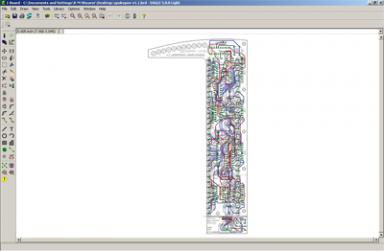
SpokePOV board in EagleCAD


SpokePOV board being assembledSpokePOV in use


One development I would love to see, and which I fully intend to get on to with time, is a housing for the SpokePOV – the current trend is for cable tying the circuit board straight onto your spokes. I have in my minds eye a vacuum formed casing, and posting the source for the mould as some kind of 3D CAD file. But maybe I should be thinking of something laser cut, and using Ponoko as the platform.

It’s really exciting to think of what’s possible, developing a product for an already successful opens source software/hardware project. And it would be fun to take on the challenge of doing it with laser cutting, given that a standard platform now exists in Ponoko – that is, until Ponoko starts offering moulding!

The truth is, I haven’t got onto it in about a year, so may never. But have a look at ladyada’s projects and maybe see if there’s anything there that piques your interest!

Incidentally, ladyada also has a very interesting section on Open Hardware, covering her definition, licenses, and a list of projects from across the web.

Images courtesy of Bekathwia and Ladyada

Tim Hunkin and the Issue of the Inventor’s Identity

This post is proud to have been syndicated to the Ponoko Blog.

A while back, the Core 77 blog led me to an archive of the 80’s series The Secret Life of… which beautifully relates the history and design of various household items.

But the real star of the show is the presenter himself, Tim Hunkin. He is one of a few multi-disciplined tinkerers whom I count as a personal hero. Cartoonist, inventor, broadcaster, sculptor – his book Almost Everything There Is to Know was a formative influence in my childhood. He is a great example to any of us who want engage in this new world of designing, adapting and making, embodying as he does both passion for the end product, as well as a broad variety of skills and experience to get there. The great thing is with the enablement of the web, we can all be part time designers, or adapters, or makers, and indulge our multifaceted natures while still holding down a day job. If not making it a day job.

Tim Hunkin


Incidentally, I constantly have trouble defining what it is I do in my studio/workshop – increasingly I err towards the term ‘tinker’ which is unsatisfactory, evoking activities of a more mischievous nature than they often are. On his personal site, Hunkin goes for ‘engineer/cartoonist’, which gives no indication of his myriad other talents.

We need a term for this new breed of inventors to which I belong and which sites such as Make, Ponoko and Instructables seem to attract. We are changeably referred to as makers, industrial designers, inventors, indie designers, hackers: none of which seem to embody the activity truthfully (the term ‘maker’ really doesn’t cut it as a valid activity amongst some of my peers, who have the benefit of such well established terms as ‘doctor’ or ‘telesales operator’). My favourite has to be ‘post-industrial designers’, as referred to in this discussion on Core77. It would certainly be good to stick to one job-title in the future, and this seems to infer the right amounts of professionalism, independence and irreverance for me!

Anyway, back to Hunkin. Have a look at his site and you will find an Aladdin’s cave of truly joyous objects, thorough explanations of his workshop and methods, all infused with the man’s quiet, considered adoration for mechanical creativity. An inspiration, whatever he is and whatever we are!

The image above is a self portrait by Hunkin, and the images below, a human sewing machine from The Secret Life of the Sewing Machine and a cartoon from Almost Everything There is to Know, used with permission from Tim Hunkin.

Human sewing machine by Hunkin Hunkin on Music

Optimising Materials Use with Ponoko

This post is proud to have been syndicated to the Ponoko Blog.

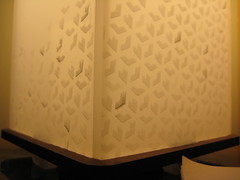
In order to get free delivery back in January, I rather hurriedly had a variation on Dan's box lamp cut, and was kicking myself when the pieces arrived for not making full use of the hardboard - I'd overlooked the fact that the box lamp only uses one bit of the hardboard, and should have added something useful as Kyokpaesshowroom (bit of a mouthful I know) did: a wee tangram puzzle. Neat.

It would be great if Ponoko alerted the designer when they are about to waste material. But since we already have a ready-made repository of laser cutting template files in Ponoko, could a program be developed that analyses your .eps file and suggests other designs that could be added to make better use of the material? This could even be done in such a way as to add a little chaos to the process, leading to some interesting mashups of designs in unintended materials, or at unforeseen scales. It seems that Ponoko has provided a great opportunity for improved efficiency of materials in this way. A quick search brings up the imaginatively named Sheet Layout but this seems overly powerful for most people's needs, and I'm unclear as to whether it could automatically place a cutting path in a given space.
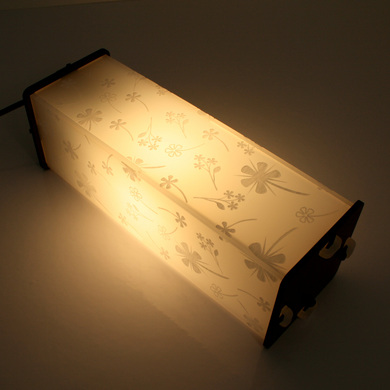
Incidentally, the case of Dan's box lamp seems to be a good example of ‘remixing’ design data on Ponoko: starting with his floral design;

Dan's box lamp

followed by Kyokpaesshowroom's dragonfly interpretation;

Kyokpaesshowroom's box lamp

and then my tea-leaf inspired design (a pattern that I pretty much cut and pasted from another of my projects):

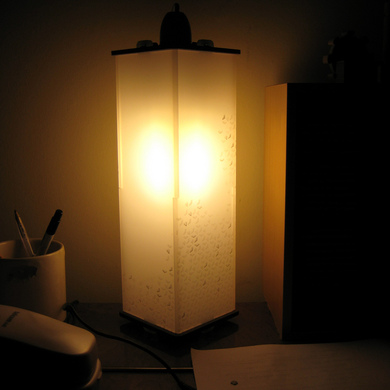
My box lamp

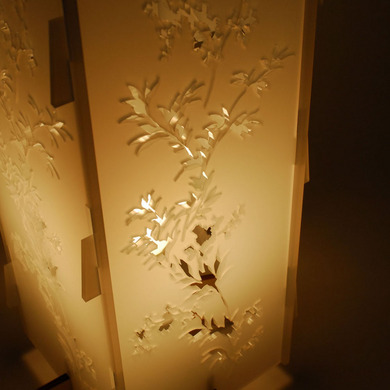
As derivatives of a ShareAlike license, all of them are available for free, on attribution and non-commercial terms. Plus there are more lamp designs using similar principles. VodkaandOrange's Bonsai lamp, below, makes great use of the laser cutter to create an intricate cut-out pattern in the acrylic. Isn't light brilliant?

Vodkaorange's Bonsai lamp

Ponoko Syndication

As I mentioned earlier, I am now writing posts for the Ponoko blog. But I seem to have laxed in my own blog! So I'm going to paste in the ones I've written thus far for Ponoko, and then start blogging for here first, hopefully, and syndicating the relevant and more lengthy posts to Ponoko.

Sunday, May 11, 2008

Microtrends: Bristlebots - Times Online

Microtrends: Bristlebots - Times Online

Article about Evil Mad Scientists' Bristlebots and variations on.

Forbes on DIY success

Forbes.com Video Network

Warning: may contain business speak and questionable ethical standards. But an interesting take on the DIY movement.

Wednesday, April 30, 2008

Ponoko Blog

Ponoko Blog

I'm starting a new role writing blog posts for Ponoko this week - should be fun and a good opportunity to write and think more about OSPD. It certainly means writing more!

Friday, April 18, 2008

Site update

Have updated the main site - particularly the projects page brings people more up to date with my design happenings.

Build a Pocket Theremin on the Cheap


Build a Pocket Theremin on the Cheap | Popular Science

Wednesday, April 16, 2008

pe lang zimoun : untitled sound objects

pe lang zimoun : untitled sound objects


via make

Arduino

Arduino - HomePage

How have I missed this? Apologies. Being unfamiliar with programming, I tend to glaze over a bit when articles start to detail exactly how their software components work. And increasingly these articles have been on about Arduino, which i took to be none of my business. But it is in fact a lot my business! Its that elusive link between Processing and tangible interaction, to paraphrase.

Arduino is an open-source electronics prototyping platform based on flexible, easy-to-use hardware and software. It's intended for artists, designers, hobbyists, and anyone interested in creating interactive objects or environments.


more here

Thursday, April 03, 2008

Sorapot - Modern Teapot - simple teapot design of glass, cast stainless steel. designed for green tea loose leaf tea by Joey Roth


Sorapot - Modern Teapot - simple teapot design of glass, cast stainless steel. designed for green tea loose leaf tea by Joey Roth

A lovely design for a teapot with sustainability as paramount - although I'm sure there must be more components than is listed, such as a seal of some sort. More information about the packaging, which is also very elegant, at Treehugger.

The photographer has used a rather odd depth of field or blur effect on these photos that make the teapot seem much smaller than it is (possibly due to the heavy grade of cardboard used too) - its actually normal sized!

Saturday, March 22, 2008

Yellow Drum Machine [Robot]


Yellow Drum Machine | Let's Make Robots!

A great wee robot drum machine, just in via Make. Its not that 'open' in terms of build instructions but the photos and descriptions are good enough to get an idea.

I have tagged this post 'elegant' in the third Chamber's sense of the word:
'said of apparatus, work in science, a plan, etc: simple and ingenious.'

Sunday, March 16, 2008

Appropedia: The sustainability wiki

"We at Appropedia passionately believe in the ability to easily share and find information so that each of us can focus our time and energy where it will have the most impact. Appropedia takes on the administration of collaboratively characterizing problems, solving problems, organizing information, project examples, best practices, how tos and authors, allowing Sustainability, Appropriate Technology, and International Development organizations and individuals to focus on what they do best.

The Appropedia Vision is that by reducing or even eliminating the costs of working together, the community of people and organizations that seek to make a difference will quickly shift from ad hoc collaboration to a deeply collaborative approach. We at Appropedia believe that this deep collaborative approach is both possible and essential to addressing the significant sustainability gaps that humanity is now coming to acknowledge. "

via opensourcedesign.org

Saturday, March 15, 2008

SHARE festival


FESTIVAL

"The SHARE festival, based in Torino, is an international gathering for digital art and culture. SHARE exhibits electronic artworks, and awards a prize each year for advancing the state of digital art.

Because of recent advances in digital fabrication technology, manufacturing is becoming a digital art and culture enterprise. The exciting advent of 3d printing, rapid prototyping, and rapid manufacturing is of profound importance to SHARE, for it bring the power to create physical objects to the techno-artist’s lab-bench, studio and atelier. It means that digital artists, whose work was once mostly virtual, can create in the actual.

SHARE has chosen the theme “Manufacturing” for its 2008 event for two compelling reasons. First, we want to demonstrate digital manufacturing to our core audience, who are very technically adept people, but not used to the idea that they can create real objects with CAD, fabricators and the Internet. The second reason is that Torino is the World Capital of Design 2008. Torino is a strong manufacturing center. SHARE is very international in its outlook and audience, but in 2008 this Torino festival should and will emphasize the fact that it is from Torino."

via Ponoko Blog

Friday, March 07, 2008

Monday, February 25, 2008

Ponoko Lamp


Ponoko Lamp
Originally uploaded by Zero-waste Design
I built a lamp using the rather tasty Ponoko interface. It is a derivation of Dan's Box Lamp, with an engraved pattern that I devised initially for teh Chai Teahouse corporate identity. I'm rather pleased with the results, the process was very easy and efficient, alrthough I could only afford to do it as Ponoko were offering free shipping (from New Zealand!)

Thursday, November 29, 2007

Sunday, November 25, 2007

Underfoot Tableware: Coasters, tablemats and placemats from carpet offcuts


The source for a new set of carpet coasters has been uploaded to Instructables and can be found here. Enjoy!

Thursday, November 08, 2007

Friday, November 02, 2007

Electron Club Talk

Electron Club - Glasgow

It is come time since, but I gave a talk at the Electron Club Open Day a couple of weeks back.

The notes are here.

It was good, enjoyed meeting some like minded folk (in the open source sense), including Edinburgh's chapter of Dorkbot, who seem to be on a SpokePOV related persistence-of-vision bender at the moment, and the ever-evolving Glasgow Greenmap. Simon Yuill also introduced us to Floss manuals, which looks like a great exercise in product design to me.

GWRP GSA

GWRP GSA

The Glasgow Wood Recycling Project are working with GSA students, (again sadly just Product Design students, rather than Product Design Engineers) on product development. They have a blog up, with links to their research (excellent) and concepts (generally good).

cube cola

cube cola

An open source cola from Bristol, currently being made by Cube Microplex cinema, which sounds like a great idea. Maybe the GFT or Grosvenor, or G12 cinemas could follow suit?

Saturday, October 20, 2007

Ladyada on Open Source Hardware Licenses

Open Source Hardware Licenses

Ladyada's considered thoughts on the necessity for not choosing a non-commercial license for your open source hardware project.

Limor is somewhat of a heroine of mine if only for her SpokePOV kits.

opensourceproductdesign.org


opensource productdesign

Another possible repository, this one with more in depth briefs than usual.

Discussion on OSPD on Philips website

Open source product design: LiveSimplicity discussion forum

A brief discussion on the fundamental pros and cons of OSPD, courtesy of a Philips discussion site.

Friday, October 19, 2007

Ponoko goes live!


Ponoko

Despite clearly being inspired by a toddlers' TV programme, Ponoko has overcome this hurdle to now offer shared source for products from a variety of laser cut boards AND a laser cutting and delivery service (for a fairly hefty price, but then it is coming from NZ). When they collaborate with a laser cutter in the UK, then we'll have something quite special.

Bug Labs


Bug Labs

Another intriguing open source hardware project, one that seems pretty ambitious to me, but then I'm not an expert on modular computing, maybe its incredibly easy..

Monday, September 17, 2007

Absolut and TreeHugger Present Downloadable Design

Absolut and TreeHugger Present Downloadable Design

Treehugger now has a minisite, apparently a contest, for 'downloadable designs'. It doesn't state open source per se, which might be why the source files leave a lot to be desired in this respect, one with no information beyond cutting paths on it, and the other with copyright notices emblazoned across it. A sorry lack of discussion or background goes with this site.

Sunday, September 16, 2007

The Power Cart


The Power Cart

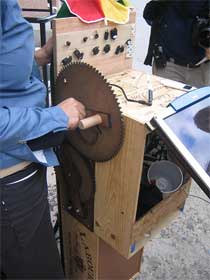
The mobile unit is inspired by street vendors, knife sharpeners from India, refills of gas in Africa, fake Gucci bags in Paris and chair massages in New York, the Power Cart looks and feels like another service for the city of today. Where ever you might be in the world, hail the Power Car for a quick fix. The Power Car owner will turn the crank for you and get the electricity you need, one minute of cranking at a time. With a little help from the solar panel.

Friday, September 07, 2007

Ikea Hacker

ikea hacker

Hackers will always rule the open source world.

Monday, September 03, 2007

Demotech, design for self reliance - Home

Demotech, design for self reliance - Home

An interesting group in Holland engaging in an open approach to sustainability, development, and 'daily living around the globe'. An impressive list of projects, plenty of info, and all pretty humanitarian.

via Neel.

Thursday, August 09, 2007

Zero-waste Design's Clearance Corner!


Zero-waste Design's Clearance Corner!

We now have a shop! some Tengreen and carpet reuse products (now called 'Underfoot') are available here.

Wednesday, July 25, 2007

Candyfab goes live proper

http://www.candyfab.org/
CandyFab.org

Wednesday, July 18, 2007

Current CHT work

Have uploaded some pictures of latest stuff (such as this build of an open source design) with Coach House Trust - should be doing more of this in the near future.

Sunday, July 15, 2007

Reprap


WebHome < Main < Reprap
"RepRap is short for Replicating Rapid-prototyper. ... RepRap will make plastic, ceramic, or metal parts, and is itself made from plastic parts, so it will be able to make copies of itself. It is a three-axis robot that moves several material extruders. These extruders produce fine filaments of their working material with a paste-like consistency.... The RepRap build cost will be less than $400 US for the bought-in materials, all of which have been selected to be as widely available everywhere in the world as possible. Also, the RepRap software will work on all computer platforms for free. Complete open-source instructions and plans are published on this website for zero cost and available to everyone so, if you want to make one yourself, you can."

Saturday, July 07, 2007

Ponoko - Make it Real


Ponoko - Make it Real

"Make things You upload your designs to the Ponoko website and select the materials. Ponoko then makes and delivers the product or product parts. You can use our making process to prototype and perfect your design. Sell things You can post your designs in the Ponoko showroom for people to view and buy. Ponoko can make the product and deliver it direct to the customer. Or it can deliver the product or product parts to you for assembly, finishing and delivery to the customer. And Ponoko makes sure everyone gets paid. So when's it happening? Ponoko is in development and we will launch version 1.0 later this year. In the meantime, we're building a community of beta users and asking them to try Ponoko in its early stages and help test our thinking. It's an exciting project and we'd love to have you take the journey with us."

Monday, July 02, 2007

Tangible mathematical devices/calculators

"Leibniz even suggested that the catenary could be used as a device for calculating logarithms, and "analog" logarithmic table of sorts. "This may help," he said, "since on long trips one may lose his table of logarithms." Was he suggesting that one should carry a chain in his pocket as a backup logarithmic table?"

from e: The Story of a Number by Eli Maor


Leibniz was writing in 1690, and was talking of the relationship between the curve described by a hanging chain (a catenary) and the natural logarithmic base e - a useful but irrational number that presumably can be derived from a catenary curve (the book does not go into detail).

I love this idea of a tangible device that connects person with abstract mathematics, without the distance and encoding/decoding of pen and paper, or a computer, or even a calculator, although these are similarly portable as well. The beaty of these examples, the abacus, a hanging chain, vernier calipers, sextants, slide rules, is that simply through their mechnics, they can help the user understand a mathematical concept, or see first hand how a mathematical concept is relevant to a tangible, physical system. There must be more examples... I mourn the increasing use of the electronic computer at the cost of purely mechanical computers.

Thursday, June 28, 2007

Vegware - Sustainable Disposables

Vegware - Sustainable Disposables

Glasgow based.

open design club

open design club

"Open Design Club"
We like to think of ourselves as a virtual design studio, which also offers the opportunity to present and share ideas and open source design products. Everybody can become a collaborator of the the Open Design Club by contributing designs and ideas or by producing and selling the products presented by the Open Design Club.
"Join the Club"
We want to inspire you to become active and creative. We offer instructions for design products you can download and produce at home. The products of the Open Design Club are licensed under a creative commons license which means, that you can copy, sample, modify and even sell them if you want. We believe that removing copyrights from our designs will inspire creativity and result in multiple new designs. We share our ideas, our know how and we hope, that you’ll contribute, too.
"Share your Ideas"


via Core77

Back from travels!

As you may or may not know I recently went away on both holiday and business, starting in Amsterdam, proceeding to Delft where I met up with ex-IPDmates Oscar, Leonoor and Roseliek. Oscar is still ensconced in the academic world, conducting research into styling strategies at the Faculty of Industrial Design Engineering at TU Delft. I visited him there and observed with awe their building - a vast warehouse type space with open access exhibition and workshop space in the middle, surrounded by dozens of studios overlooking it from a gallery level - the place was alive with work, and hundreds and hundreds of students! Quite a step up from PDE in Glasgow in terms of size!

Meanwhile Leonoor and Roseliek both work in consultancy including Fabrique and the very interesting Innovaders, a small sustainability-driven consultancy in Amsterdam, currently working on a power monitoring device for the home. I had a great time chatting on design and memories of Norway, and might even consider collaborating with Oscar on some research if we focus on some common ground - perhaps the significance of styling in defence contract bidding?!

Following on from Delft I promptly took the train (was doing the whole trip by train, mainly cos one can!) to Barcelona and Sonar 07! Oh yes. I had been looking forward to this for about, oo, a year equally for the music and the art and interaction pieces, and was not disappointed. Of particular interest was the SonarMatica, this year on the theme of Magic! Particularly pertinent as I was staying with an accomplished magician and Ramblas performer, Fergus, and his able assistant Suz! It was fascinating to approach the interactive exhibits from a completely product-based point of view, that is, without concern for the workings but the ultimate experience. And most of them really were magical to play with, particularly Philip Worthington's Shadow Monsters, which I first saw at the RCA show last year. This time he's added all sorts of new augmentations to the shadows, including turning any closed loops in the shadow (such as making an 'o' between thumb and forefinger) into eyes! With the sounds, the place was abuzz with particpiants sounding like a menagerie. Just on from that minim++ exhibited Tool's Life, which again played with shadows but with a level of tactility in that upon touching objects upon a table, their shadows are augmented with characterful animations and sounds - a seamless and simple idea. Round at the back of space, similar experiments with projection were taking place such as Christine Sugrue's Delicate Boundaries in which squirming bugs on a screen magically wriggled onto your hands as you approached them, with a wonderful life of their own, part trying to stay on your palm, but mostly rolling all over it. Just on from that, Diego Diaz and Clara Boj's AR_magic system was causing hoots of delight as people, looking at their wall-sized reflections proceeded to remove their friends' faces and place them on their own.

The latter projects were devised out of a workshop at the Medialab Madrid, and I was fortunate enough to attend a talk by a couple of the participants who talked with enthusiasm about the symapthetic experiential relationship between magic tricks and designed interactions - both ultimately concerned with audience's often beguiled entertainment, but what Zach Liebermann described as the 'open-mouth' effect - the involuntary dropping of the jaw that he observed amongst his audiences and is so well known by illusionists. Zach is a member of medialab and worked with Spanish magician Mago Julián on a show which was also performed amongst others at the exhibition. It was again a seamlessly choreographed performance mixing sleight of hand with video trickery to demonstrate what might be possible when technicians and artists collide. The project is called Open-sourcery and as the name suggested the aim is to distribute the source for the tools for further development by the magical community, an interesting and fundamental differnce in paradigms between the now well-known and oft expected open distribution of technical content and the equally well known propreitary and close nature of the magic circle!

Soon after that Julien Maire's Digit performance was completely unexplainable. The Sonar website describes it better than I can:

A writer sits at a table writing the script of a film. Simply by sliding his finger over a blank piece of paper, printed text appears under his index finger. The spectators can come very close to the “writer” and read the text following the movement of the finger.
The performance is simple but quite disturbing. Nothing appears to be in the way between the thought and the printed words. It seems that there is a shortcut somewhere: there is not computer, no typewriter, no noise, no projection. The spectator is free to follow a text written and drawn in a very easy and natural movement.


Another thing that Zach Liebermann mentioned and that I discussed later with Fergus, is the already established link between technology and magic - many tricks rely on the peculiar nature of a certain material, or some cleverly conceived and concealed device. Fergus pointed out the story of the Mechanical Turk (an excellent book exists on this by the way, I thoroughly recommend it). Later on, Fergus pointed out an amazing puppeteer on La Ramblas, deftly making a frog play a miature piano in perfect finger-synchrony with a soundtrack. Yet again a 'performer->technical device->magical outcome' situation. Wouldn't it be fun to design these things?

Most links via sonar.es

There are many more gushing things to be said about Barcelona, but shall leave that for now ... onwards to Paris and Mr. David McCormick, reluctant researcher in Vision Science, or more specifically, the relationship between visual and aural cognition and from what I could fathom, trying to deliberately confuse people to see if he can using only bleeps and greyscale monitors! Can't say that we talked much design, although Dave has always been something of a design lover - I particularly admired his paperbag lights and continued my wonderings as to whether his love of design and the web and his research are linked in any direct way. I doubt it given his dislike for his current job, but he certainly conceded that he finds the audio-visuals at gigs a much more valid application of cognitive theory, and he should know, being as much of an expert in gig attendance as vision science..

While in Paris I also attended an exhibition at the Le musée
des Arts décoratifs
in the Louvre on Italian designer Joe Colombo, but it didn't interest me all that much to be honest - a little too adulative for me, praiding his futurism. It was indeed 60s futuristic, that is undeniable. But how much can you say the designers inspired the set designers and illustrators or vice versa without asking where it got them? One-off trade shows it seems, and innspiring another style trend. Fair enough, but not my cup of tea.

So from Paris to London, and the RCA show, the Central Martin's show, the Bartlett show.. it was hectic!

JFD work continues

My work with James Fisher Defence continues, on a Submarine Rescue Vehicle for the South Korean Navy. Unfortunately due to confidentiality I can't show you what I've been working on but I can say it is big, exciting and very, very real!

Coach House Trust Open Day

The Coach House Trust had an open day on Sunday, at which we debuted our preliminary exhibition on the art, design, architecture and geometry relating to local heritage sites Dowanhill church and the Lansdowne Church. Do pop along to the upstairs room at 84, Belmont Lane (next to Viper!) for a wee gander. The exhibition has been designed to expand over the next few months of research and development and will hopefully be displayed in its more detailed form later in the year.

Friday, June 08, 2007

Eco Design Challenge Article

I recently took part in a DOOTT07 scheme with Macmillan Academy in Middlesbrough - DOTT have posted an article about the day here. Macmillan academy article here.